
Last verified: April 2026. Prices, physicians, and English support can change — confirm directly when booking.
Stretch mark treatment Tokyo options in 2026 work better on fresh red striae than on mature white ones, and picking the right device for the right phase is the difference between a meaningful improvement and wasted sessions. This guide covers what each laser and device actually does for stretch marks in an English-speaking Tokyo setting, realistic 2026 prices in ¥ and USD, the clinics worth shortlisting, and how Kanbi handles the Japanese booking side.
What to Know Before Stretch Mark Treatment in Tokyo
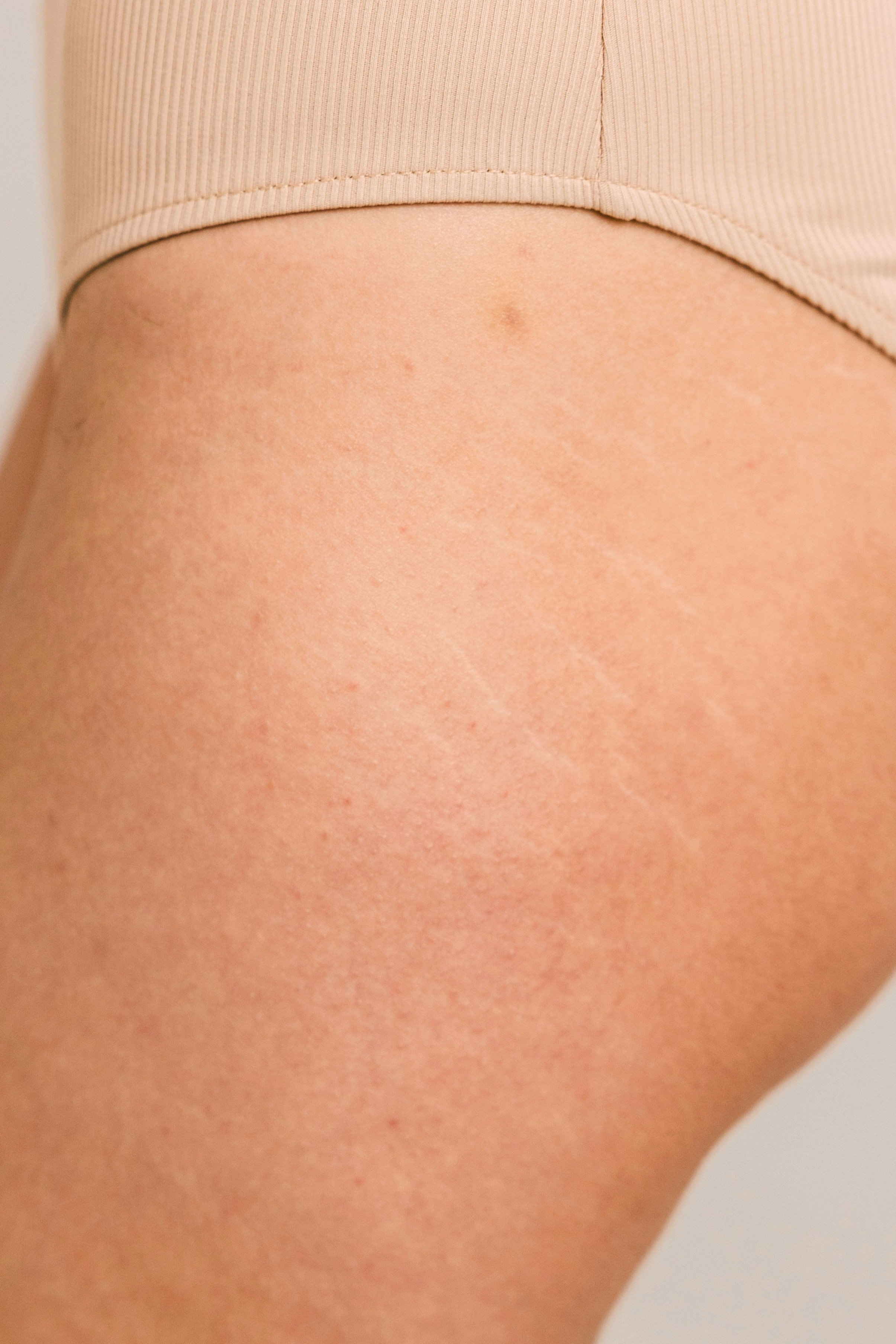
Stretch marks (striae distensae) form when rapid skin stretching — pregnancy, puberty growth spurts, rapid weight change, bodybuilding — disrupts collagen and elastin architecture in the dermis. Clinically they go through two phases: striae rubrae, the fresh red or purple phase in the first 6–12 months, which responds best to treatment, and striae albae, the mature white or silver phase, where the skin has lost pigment and collagen, and which responds more slowly and less completely. No current treatment "removes" stretch marks the way laser tattoo removal can remove ink; realistic expectations are 25–50% improvement in appearance — softer texture, reduced width, better colour match — across a multi-session protocol. Most Tokyo clinics offering laser stretch mark Tokyo programs use fractional CO2 or fractional Er:YAG as the workhorse, adding Vbeam (pulsed dye laser) for active red striae and microneedling RF (Morpheus8, Potenza, Sylfirm X) for atrophic depressed stretch marks. Stretch mark treatment is almost always a supporting treatment in a broader plan — combined with topical retinoid during the active phase, body contouring where fat loss has left loose skin, and realistic timing after pregnancy or major weight change.
- Fractional CO2 laser — ablative fractional resurfacing. Strongest evidence for mature white striae on texture improvement. 3–5 sessions spaced 6–8 weeks.
- Fractional Er:YAG (non-ablative) — gentler alternative. More sessions needed (5–8) but shorter downtime and lower PIH risk.
- Pulsed dye laser (Vbeam) — targets the red/purple vessels in striae rubrae. Best used in the first 6–12 months.
- Microneedling RF (Morpheus8, Potenza, Sylfirm X) — collagen stimulation through the dermis. Good for atrophic depressed stretch marks.
- Traditional microneedling (Dermapen) — cheaper, multi-session, modest improvement.
- Rejuran skin booster — polynucleotide injection. Used adjunctively in some Tokyo clinics to support dermal repair.
- Topical tretinoin (0.05–0.1%) — prescription retinoid. Only useful during the active red phase; not safe during pregnancy or breastfeeding.
- Mature white striae respond more slowly than fresh red striae — expect longer protocols and more modest results.
- Tourists can start a stretch mark treatment in Tokyo, but meaningful protocols need 3–8 sessions spaced 4–8 weeks apart. One-off visits are useful for starting a plan, not completing it.
- East Asian and darker skin tones are at higher risk of post-inflammatory hyperpigmentation (PIH) with fractional CO2 — conservative settings and strict sun protection matter.
- SPF 50 on the treated area for 4–6 weeks after each session is non-negotiable.
- Avoid treatment while pregnant or breastfeeding; most clinics require 6 months post-delivery before starting laser protocols on abdominal stretch marks.
5 English-Speaking Stretch Mark Treatment Clinics in Tokyo
Shirono Clinic — Ebisu
A dermatology-focused clinic in Ebisu with strong infrastructure for non-surgical body treatments. The stretch mark removal Tokyo English program uses fractional CO2 as the workhorse, with Vbeam added for striae rubrae and microneedling RF for atrophic marks. Conservative energy settings on Asian skin help limit PIH risk, and multi-session protocols are planned with clear milestones rather than open-ended packages.
- English level: High — English consent, English-speaking staff
- Price range: ¥35,000–¥110,000 per session (per treated area)
- Best for: Mature white stretch marks on abdomen, hips, thighs, requiring fractional CO2 series
- Caveat: Does not offer body contouring surgery — if excess loose skin is the main issue, needs surgical referral
Tokyo Midtown Clinic — Roppongi
The dermatology department at Tokyo Midtown Clinic handles striae treatment Japan patients seek, with access to fractional CO2, Vbeam, and microneedling RF devices. The clinic's formal intake includes photo documentation at each session, which is helpful for tracking slow progress on mature striae. Large treatment areas (full abdomen, both thighs) are split into multiple sessions rather than treated aggressively in one visit.
- English level: High — clinic has served diplomatic and international corporate clientele for years
- Price range: ¥45,000–¥120,000 per session
- Best for: Larger treatment areas and patients wanting photo-tracked progress across multiple sessions
- Caveat: Pricing sits at the upper end of the Tokyo range, reflecting the large-clinic premium
Minami Aoyama Skin Care Clinic — Aoyama
A dermatology clinic in Aoyama with a broad laser and device menu including fractional CO2, fractional Er:YAG, and Sylfirm X. The practice leans toward combination protocols — alternating laser and microneedling RF sessions across a multi-month plan — which suits mature white striae that need sustained dermal remodelling.
- English level: Moderate-high — English consent, staff handle English consultations regularly
- Price range: ¥30,000–¥95,000 per session
- Best for: Combination laser + microneedling RF protocols planned over 6+ months
- Caveat: Single-session bookings are less common — the clinic tends to recommend multi-session packages upfront
AOI 7 Clinic — Ginza
AOI 7 offers microneedling stretch marks Tokyo patients a central Ginza option with access to fractional CO2 and microneedling RF for atrophic striae. Good for patients combining stretch mark work with other aesthetic treatments during a longer Tokyo visit, though the clinic is less specialized for body work than clinics that focus on striae and scar protocols.
- English level: High — staff handle English-speaking patients regularly across departments
- Price range: ¥30,000–¥90,000 per session
- Best for: Smaller treatment areas and patients already receiving other treatments at the clinic
- Caveat: Not the first choice if stretch marks are the primary concern across large body areas — specialty dermatology clinics run deeper protocols
Shinanozaka Clinic — Yotsuya/Shinjuku
A long-running Yotsuya clinic offering conservative, methodical stretch mark protocols. Fractional CO2 is the primary device; Vbeam is used selectively for striae rubrae. The consult style is realistic — the physician sets expectations at 25–50% improvement rather than promising dramatic results, which matches the current evidence base.
- English level: Moderate — English consent materials, Japanese-primary consult with interpreter available
- Price range: ¥28,000–¥80,000 per session
- Best for: Patients who prefer realistic expectation-setting and lower per-session pricing
- Caveat: English support is real but not native-fluent — Kanbi concierge adds a useful buffer here
Stretch Mark Treatment Tokyo Price Comparison (Tokyo, 2026)
Prices below are 2026 per-session ranges by modality and area. Total protocol cost is per-session × session count (typically 3–8 sessions for meaningful improvement).
| Modality | Typical Session Count | Price per Session (¥) | Price per Session (USD) |
|---|---|---|---|
| Fractional CO2 laser (per area) | 3–5 sessions, 6–8 weeks apart | ¥40,000–¥120,000 | $267–$800 |
| Fractional Er:YAG (non-ablative) | 5–8 sessions, 4–6 weeks apart | ¥30,000–¥90,000 | $200–$600 |
| Vbeam (pulsed dye laser) | 3–5 sessions, 4 weeks apart | ¥25,000–¥70,000 | $167–$467 |
| Microneedling RF (Morpheus8 / Potenza / Sylfirm X) | 3–5 sessions, 4–6 weeks apart | ¥45,000–¥110,000 | $300–$733 |
| Traditional microneedling (Dermapen) | 5–8 sessions, 4 weeks apart | ¥15,000–¥40,000 | $100–$267 |
| Rejuran body (adjunct injection) | 3 sessions, 3–4 weeks apart | ¥50,000–¥120,000 | $333–$800 |
Prices exclude consult fees and post-treatment products unless stated. ¥150 = $1 used for conversion. "Area" definitions vary by clinic — confirm whether "abdomen" means lower abdomen only or full abdomen at consult.
Not sure which clinic to choose, or how to book in Japanese? Kanbi handles clinic selection, Japanese communication, and booking for stretch mark treatment treatments. Submit a treatment request → kanbicare.com
Stretch Mark Treatment Tokyo FAQ
How much does stretch mark treatment cost in Tokyo?
Budget ¥150,000–¥600,000 total for a meaningful protocol in 2026. A fractional CO2 series on one area (e.g., lower abdomen) runs 3–5 sessions at ¥40,000–¥120,000 each. Adding Vbeam for active red striae or microneedling RF for atrophic marks expands the total. Larger treatment areas (full abdomen + hips + thighs) are priced per area and can push total protocol cost above ¥800,000. Single-session pricing is the wrong framing — plan the whole protocol.
How many sessions and how long do results last?
Fractional CO2 typically needs 3–5 sessions spaced 6–8 weeks apart; microneedling RF needs 3–5 sessions spaced 4–6 weeks apart; Vbeam for active red striae needs 3–5 sessions spaced 4 weeks. Results — typically 25–50% improvement in appearance and texture — are generally permanent in the sense that treated tissue does not revert, though new stretch marks can form with future rapid weight change or pregnancy. Yearly maintenance sessions are optional but not required.
Does stretch mark treatment actually work?
Yes, with realistic expectations. Fractional CO2 has the strongest evidence for meaningful improvement in both striae rubrae and striae albae. Vbeam reliably reduces redness in active striae. Microneedling RF is well-supported for atrophic depressed stretch marks. No treatment currently erases stretch marks completely — 25–50% improvement is a reasonable expectation across a full protocol. Patients expecting 80%+ clearance from any single device will be disappointed; combination protocols give better results than single modality alone.
Is stretch mark treatment safe and what are the side effects?
Most device-based stretch mark treatments are low-risk in experienced hands. Expected side effects: redness for 2–7 days, pinpoint scabbing with fractional CO2 for 5–10 days, swelling for 1–3 days. Less common risks include post-inflammatory hyperpigmentation (PIH) — notably higher on East Asian and darker skin tones with aggressive fractional CO2 settings — prolonged redness, and rare scarring. Strict sun avoidance and SPF 50 during and after protocols reduces PIH risk substantially. Conservative settings and Asian-skin-aware protocols are standard in Tokyo clinics for this reason.
Can tourists get stretch mark treatment in Tokyo?
Yes, but the protocol length makes Tokyo better suited to residents or patients who can plan multiple visits. A single visit can start the plan — one laser or microneedling RF session — and Tokyo clinics will provide English-language treatment notes for continuation at a home clinic. Short-term tourists wanting a complete protocol should plan 3–6 months with periodic return visits rather than compressing sessions (which actually reduces effectiveness because the dermis needs remodelling time between sessions).
What's the difference between laser stretch mark treatment and microneedling stretch marks Tokyo clinics use?
Laser treatment (fractional CO2, Er:YAG, Vbeam) uses light-based energy to remodel dermal tissue. Fractional CO2 is ablative — it vaporizes columns of tissue to trigger remodelling, with more downtime and stronger results. Microneedling (traditional Dermapen) and microneedling RF (Morpheus8, Potenza, Sylfirm X) create mechanical or RF-energy injury through fine needles, stimulating collagen without ablating the surface. Lasers tend to work better on texture and colour; microneedling RF tends to work better on atrophic depression. Combination protocols alternate the two.
Can I combine stretch mark treatment with body contouring?
Yes — and it often makes sense. Patients with loose skin and stretch marks after weight loss or pregnancy sometimes benefit more from body contouring surgery (mini abdominoplasty, tummy tuck) that removes the stretched skin entirely than from laser treatment of marks on skin that won't retract. Laser or microneedling RF works on remaining stretch marks after surgery. Tokyo plastic surgery clinics that handle both can sequence these treatments in one plan. For patients who don't want surgery, laser plus microneedling RF is the most effective non-surgical path.
Is stretch mark treatment cheaper in Tokyo vs Seoul or Bangkok?
Tokyo sits mid-range in the East Asian stretch mark treatment market. Seoul offers aggressive multi-session laser packages driven by cosmetic tourism volume; Bangkok has lower per-session pricing but wider device-quality variance. Tokyo's value is conservative, Asian-skin-aware laser settings that reduce PIH risk — a meaningful concern for fractional CO2 on body skin — and English-language treatment notes that transfer cleanly to a home clinic. For English-speaking care with conservative dosing protocols, Tokyo pricing is competitive.
Book Stretch Mark Treatment Tokyo with Kanbi
Stretch mark treatment Tokyo options in 2026 span five English-capable dermatology clinics, modalities from Vbeam for fresh red striae to fractional CO2 and microneedling RF for mature white striae, and pricing from ¥28,000 per session to ¥800,000+ for full multi-area protocols. Realistic expectations (25–50% improvement), the right device for the striae phase, and Asian-skin-aware conservative settings matter more than chasing the lowest per-session price. Kanbi shortlists the right clinic for your striae phase and treatment area, handles the Japanese-language booking, and coordinates multi-session protocols in English — submit a treatment request at kanbicare.com to start.
Related Kanbi guides: CO2 laser resurfacing in Tokyo, microneedling RF in Tokyo, and mommy makeover in Tokyo.