
Last verified: April 2026. Prices, device availability, and English support change: confirm directly with the clinic or through Kanbi before booking.
Booking microneedling RF Tokyo clinics actually run in English: on the device you specifically want, at a fair price: is a narrower shortlist than the device logos suggest. This guide covers how Tokyo clinics approach radiofrequency microneedling in 2026, realistic prices in both ¥ and $, and the English-speaking clinics foreigners most often book through.
What to Know Before Microneedling RF in Tokyo
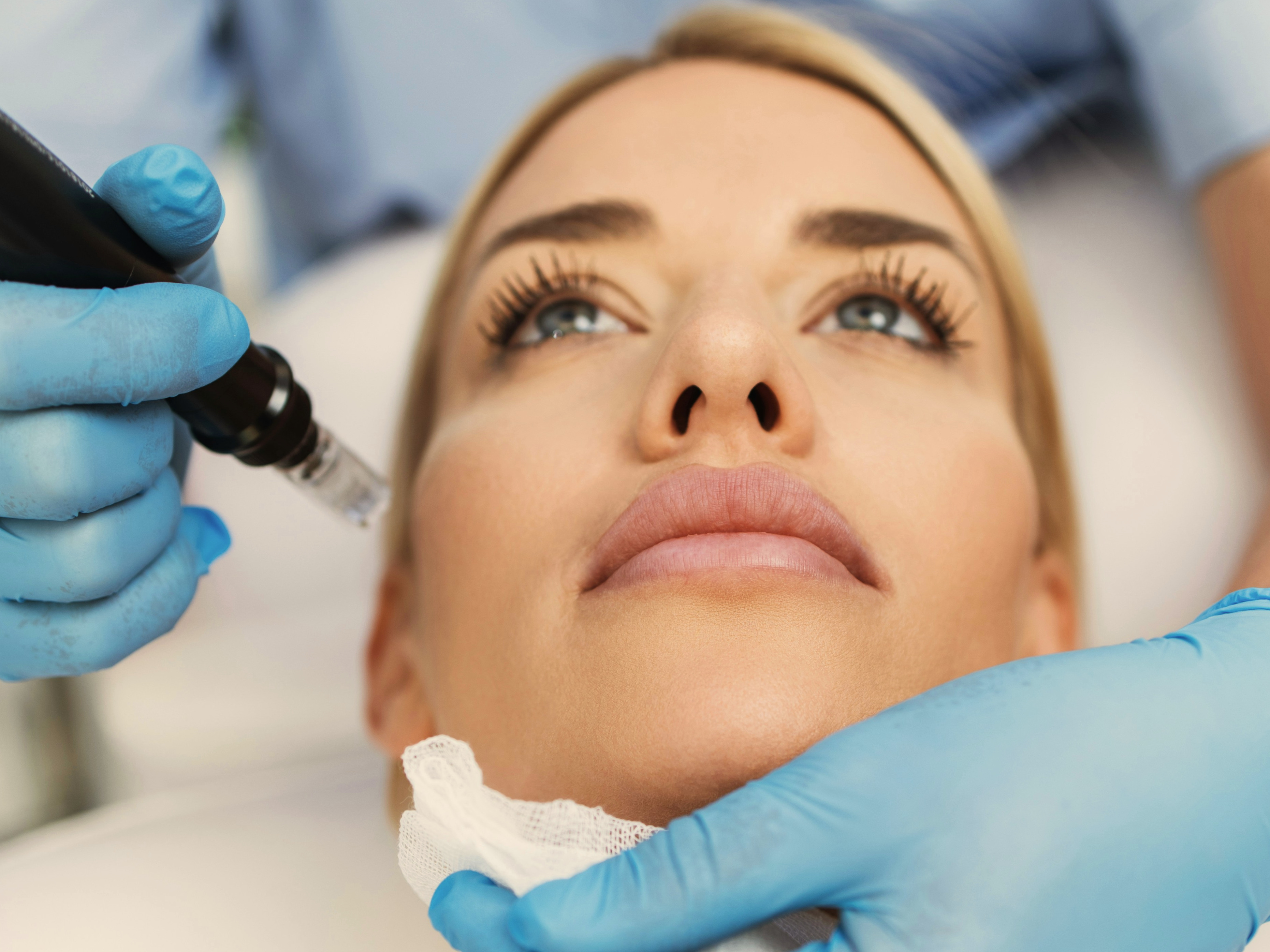
Radiofrequency microneedling combines insulated micro-needles with RF energy delivered at the needle tip, targeting the dermis at precise depths (usually 0.5 to 4.0 mm on face, up to 8 mm on body) to drive collagen remodelling, scar improvement, and modest skin tightening. Tokyo clinics tend to run conservative energy and density settings on Asian skin to minimize post-inflammatory hyperpigmentation, and most reputable clinics disclose which device they use and at what settings: worth asking directly, because "RF microneedling" can mean very different things on different machines.
Devices and techniques in the Tokyo market:
- Morpheus8 Tokyo clinics carry as a premium option: InMode's device with 24 to 40-pin tips and depths to 8 mm, widely used for face and body
- Potenza RF Tokyo English-speaking clinics offer with four tip options and dual monopolar/bipolar RF, a Cynosure device with strong published evidence
- Sylfirm X: Viol's dual-wave (continuous and pulsed) device, particularly well-suited for pigmentation, melasma, and vascular concerns on Asian skin
- Secret RF and Vivace RF: established fractional RF platforms still on several Tokyo clinic menus
- Legacy Infini: older Lutronic device, still in use at some clinics at lower price points
- Needle depth variation within a single session (e.g. 2.0 mm, 1.5 mm, 0.8 mm stacked passes) to address different dermal layers
- Combination plans pairing fractional RF Tokyo sessions with Picolaser for pigmentation, Rejuran for acne scar texture, or Ultherapy/Thermage FLX for deeper tightening
Practical notes for foreigners:
- Topical anesthetic is applied for 30 to 45 minutes before treatment; expect a further 10 to 30 minutes of numb-cream time per area
- Expected downtime is 24 to 72 hours of redness and pinpoint scabbing; heavy makeup and sweat-inducing exercise should wait 3 to 5 days
- Stop retinoids, glycolic acid, and other active skincare 5 to 7 days before and after
- Sun protection is non-negotiable for 2 to 4 weeks post-treatment given Tokyo's UV index in spring and summer
- Isotretinoin users should wait 6 months post-discontinuation at most clinics before RF microneedling
- Consultation fees (¥3,300 to ¥5,500 / ~$22 to $37) are usually separate from the treatment price
5 English-Speaking Microneedling RF Clinics in Tokyo
Shirono Clinic: Ebisu
A long-running aesthetic dermatology group with an Ebisu flagship that sees many foreign patients. Shirono carries Potenza and Sylfirm X for RF microneedling, and frequently stacks sessions with Picolaser or topical tranexamic acid for patients addressing both texture and pigmentation.
- English level: English-speaking staff available by appointment; written consent forms in English
- Price range: ¥55,000 to ¥110,000 ($367 to $733) per full-face session (Potenza or Sylfirm X)
- Best for: Asian skin pigmentation-plus-texture cases, Sylfirm X protocols for melasma
- Caveat: does not carry Morpheus8: patients specifically wanting that device need to go elsewhere
Tokyo Midtown Clinic: Roppongi
The dermatology department inside Tokyo Midtown Clinic runs a more medical-feeling RF microneedling practice. They carry Potenza and favor conservative settings with layered depths. Strong at honest patient selection: they'll redirect patients whose main concern is laxity toward Ultherapy or Thermage FLX instead.
- English level: full English intake; several physicians trained or board-certified abroad
- Price range: ¥66,000 to ¥121,000 ($440 to $807) per full-face session
- Best for: first-time RF microneedling patients, medical-grade consultation, conservative settings
- Caveat: priced at the upper end of the Tokyo market with minimal package discounting
Minami Aoyama Skin Care Clinic: Aoyama
Well-known among expats in central Tokyo, with Morpheus8, Potenza, and Sylfirm X on the menu: useful for comparing devices directly in a single consultation. They regularly pair radiofrequency microneedling Tokyo plans with Picolaser, Rejuran, and Ultherapy as a broader skin-quality programme.
- English level: English-speaking concierge; physicians use English with translation support as needed
- Price range: ¥49,500 to ¥165,000 ($330 to $1,100) per full-face session depending on device; Morpheus8 at the top of the range
- Best for: patients wanting to compare Morpheus8 vs Potenza vs Sylfirm X in one place
- Caveat: aftercare products are strongly recommended and meaningfully increase the total spend
AOI 7 Clinic: Ginza
A Ginza aesthetic clinic with dermatology and plastic surgery under one roof. Carries Potenza and Sylfirm X for face and body, and is useful if you want RF microneedling coordinated with Thermage FLX, Silhouette Soft threads, or a JSAPS-led surgical consultation in the same clinic.
- English level: English-speaking receptionist; consultation via English-speaking doctor on select days
- Price range: ¥44,000 to ¥99,000 ($293 to $660) per full-face session
- Best for: combination visits, patients coordinating multiple treatments under one roof
- Caveat: the menu is wide: stay disciplined about the specific device and number of sessions you agreed to in writing, as add-ons are easy to accept in the moment
Shinanozaka Clinic: Yotsuya / Shinjuku
A smaller, doctor-led practice with JSAPS/JSPRS-certified physicians on staff. Carries Potenza with conservative, surgeon-planned settings, and takes a careful approach to scar and laxity cases that often includes discussing surgical alternatives alongside RF microneedling rather than only selling the device treatment.
- English level: English consultations available with specific doctors by request
- Price range: ¥60,500 to ¥104,500 ($403 to $697) per full-face session
- Best for: acne scar cases, patients who want honest discussion of device vs surgical options
- Caveat: capacity is limited and lead times for English-language slots can be 4 to 6 weeks
Microneedling RF Tokyo Price Comparison (Tokyo, 2026)
Typical 2026 price ranges for microneedling RF Tokyo patients encounter, broken out by device and area.
| Device / Area | Typical Range (¥) | USD Equivalent | Session Notes |
|---|---|---|---|
| Potenza full face (per session) | ¥55,000 to ¥110,000 | $367 to $733 | 3 to 4 sessions, 4 to 6 weeks apart |
| Sylfirm X full face (per session) | ¥55,000 to ¥121,000 | $367 to $807 | good for pigmentation / melasma |
| Morpheus8 full face (per session) | ¥88,000 to ¥165,000 | $587 to $1,100 | premium positioning in Tokyo |
| Morpheus8 Body (per area, per session) | ¥121,000 to ¥242,000 | $807 to $1,613 | larger tips, deeper depths |
| Secret RF / Vivace RF (per session) | ¥44,000 to ¥88,000 | $293 to $587 | established platforms |
| Neck (add-on, per session) | ¥33,000 to ¥66,000 | $220 to $440 | with face package |
| Full-face package of 3 (Potenza) | ¥150,000 to ¥297,000 | $1,000 to $1,980 | typical 3-session package |
| Consultation fee | ¥3,300 to ¥5,500 | $22 to $37 | per visit |
Prices are ranges across the clinics above at April 2026; confirm directly when booking. USD converted at ¥150 = $1.
Not sure which clinic to choose, or how to book in Japanese? Kanbi handles clinic selection, Japanese communication, and booking for microneedling RF treatments. Submit a treatment request → kanbicare.com
Microneedling RF Tokyo FAQ
How much does microneedling RF in Tokyo cost?
A single full-face Potenza or Sylfirm X session runs ¥55,000 to ¥121,000 ($367 to $807) at English-speaking Tokyo clinics in 2026. Morpheus8 sits higher at ¥88,000 to ¥165,000 ($587 to $1,100) per face session given its premium positioning. Packages of three typically run ¥150,000 to ¥297,000 total (a 10 to 20% discount vs per-session). Body treatments are ¥121,000 to ¥242,000 per area per session on Morpheus8 Body. Consultation fees of ¥3,300 to ¥5,500 are usually separate.
How many sessions do I need and how long do results last?
Most protocols call for 3 to 4 sessions spaced 4 to 6 weeks apart, with visible change starting to appear after the second session and final remodelling continuing for 3 to 6 months after the last treatment. Results on texture, pores, and mild acne scars can last 1 to 2 years before meaningful decline; annual maintenance sessions are common. Collagen stimulation is additive, so patients who integrate RF microneedling with their broader plan often do better long-term than those who rely on it alone.
Does microneedling RF actually work?
Yes: RF microneedling has strong published evidence for improvement in atrophic acne scars, enlarged pores, skin texture, and mild laxity, with FDA and PMDA-recognized devices showing consistent results across studies. For severe skin laxity, deep rhytids, or significant volume loss, RF microneedling alone will underdeliver: in those cases it's best framed as a supporting treatment in a broader plan that might include Ultherapy, Thermage FLX, fillers, or surgical consultation. An honest clinic will tell you when your concern is actually beyond what RF microneedling can address.
Is microneedling RF safe and what are the side effects?
RF microneedling is well-tolerated at licensed Tokyo clinics. Expected effects include 24 to 72 hours of redness, mild swelling, pinpoint scabbing, and temporary dryness. Less common but real risks include post-inflammatory hyperpigmentation (PIH) on Asian skin if energy is set too high, transient tracking marks, infection if aftercare isn't followed, and: rarely: small scars or burn marks from inappropriate settings. Choosing a clinic that disclose device settings and has experience with Asian skin meaningfully reduces risk.
Can tourists get microneedling RF in Tokyo?
Yes. There's no residency requirement, and most English-speaking clinics will treat visitors. Practical timing: schedule treatment at least 3 to 5 days before any social events or photography, and ideally early in a longer trip so you can do a follow-up if needed. Because meaningful change requires a course of sessions, a single tourist visit is typically a starting point rather than a finish line: some patients do the first session in Tokyo and continue with a clinic in their home country.
What's the difference between Morpheus8 and Potenza?
Morpheus8 (InMode) uses bipolar RF with 24 to 40-pin tips and depths up to 8 mm, marketed heavily for face and body contouring with a premium price tag. Potenza (Cynosure) offers dual monopolar and bipolar RF across four tip options and is more often positioned as the flexible clinical workhorse. Real-world results on facial texture and acne scars are broadly comparable when protocols are matched: the bigger variable is the operator's experience and energy settings, not the device badge. Sylfirm X differs further with a dual-wave pulsed option that's particularly useful for pigmentation and vascular concerns on Asian skin.
Can I combine microneedling RF with other treatments?
Commonly, yes. Popular combinations in Tokyo include RF microneedling plus Picolaser for texture-and-pigment cases (scheduled 2 to 4 weeks apart), RF microneedling plus Rejuran (on alternating visits to boost scar remodelling), and RF microneedling plus Ultherapy or Thermage FLX sequenced months apart for laxity plus texture. PRP or exosome topical application immediately after RF microneedling is offered by some clinics as an add-on. Botox, fillers, and Silhouette Soft threads are typically scheduled on different days.
Is microneedling RF cheaper in Tokyo than in Seoul or Bangkok?
Seoul is often 20 to 35% cheaper per Potenza or Sylfirm X session, and Bangkok is cheaper still; Morpheus8 specifically varies by how aggressively InMode has been distributed in each market. Tokyo's value sits elsewhere: device authenticity and maintenance is reliable, clinics tend to run at manufacturer-recommended settings rather than pushing aggressive energy that increases PIH risk, and physician involvement in the actual treatment is more common than in nurse-led high-volume markets. If absolute price is the priority, Tokyo isn't the cheapest; for genuine devices at sensible settings, it holds up well.
Booking Microneedling RF in Tokyo Through Kanbi
Choosing a microneedling RF Tokyo clinic as a foreigner means balancing English availability, device choice, operator experience, and fair pricing: and most clinic websites are Japanese-only with limited transparency on which device they use and at what settings. Kanbi matches you to the right English-speaking dermatologist in Tokyo, handles the Japanese-language communication, verifies device and protocol, and coordinates booking. Submit a treatment request at kanbicare.com and we'll take it from there.
Related Kanbi guides: PRP facial in Tokyo, CO2 laser in Tokyo, and acne scar treatment in Tokyo.
Microneedling RF Tokyo
Last verified: April 2026. Prices, device availability, and English support change. Confirm directly with the clinic or through Kanbi before booking.
Booking microneedling RF Tokyo clinics actually run in English, on the device you specifically want, at a fair price, is a narrower shortlist than the device logos suggest. This guide covers how Tokyo clinics approach radiofrequency microneedling in 2026, realistic prices in both ¥ and $, and the English-speaking clinics foreigners most often book through.
What to Know Before Microneedling RF in Tokyo
Radiofrequency microneedling combines insulated micro-needles with RF energy delivered at the needle tip, targeting the dermis at precise depths (usually 0.5 to 4.0 mm on face, up to 8 mm on body) to drive collagen remodelling, scar improvement, and modest skin tightening. Tokyo clinics tend to run conservative energy and density settings on Asian skin to minimise post-inflammatory hyperpigmentation, and most reputable clinics disclose which device they use and at what settings. Worth asking directly, because RF microneedling can mean very different things on different machines.
Devices and techniques in the Tokyo market:
- Morpheus8: InMode's device with 24 to 40-pin tips and depths to 8 mm, widely used for face and body. Carried by some Tokyo clinics as a premium option.
- Potenza RF: Cynosure device with four tip options and dual monopolar/bipolar RF. Strong published evidence and commonly offered at English-speaking Tokyo clinics.
- Sylfirm X: Viol's dual-wave (continuous and pulsed) device, particularly well-suited for pigmentation, melasma, and vascular concerns on Asian skin.
- Secret RF and Vivace RF: established fractional RF platforms still on several Tokyo clinic menus.
- Legacy Infini: older Lutronic device, still in use at some clinics at lower price points.
- Needle depth variation within a single session (e.g. 2.0 mm, 1.5 mm, 0.8 mm stacked passes) to address different dermal layers.
- Combination plans pairing fractional RF Tokyo sessions with Picolaser for pigmentation, Rejuran for acne scar texture, or Ultherapy/Thermage FLX for deeper tightening.
Key things to know before booking:
- Topical anaesthetic is applied for 30 to 45 minutes before treatment. Expect a further 10 to 30 minutes of numb-cream time per area.
- Expected downtime is 24 to 72 hours of redness and pinpoint scabbing. Heavy makeup and sweat-inducing exercise should wait 3 to 5 days.
- Stop retinoids, glycolic acid, and other active skincare 5 to 7 days before and after.
- Sun protection is non-negotiable for 2 to 4 weeks post-treatment given Tokyo's UV index in spring and summer.
- Isotretinoin users should wait 6 months post-discontinuation at most clinics before RF microneedling.
- Consultation fees (¥3,300 to ¥5,500 / approx. $22 to $37) are usually separate from the treatment price.
5 English-Speaking Microneedling RF Clinics in Tokyo
Shirono Clinic, Ebisu
A long-running aesthetic dermatology group with an Ebisu flagship that sees many foreign patients. Shirono carries Potenza and Sylfirm X for RF microneedling, and frequently stacks sessions with Picolaser or topical tranexamic acid for patients addressing both texture and pigmentation.
English level: English-speaking staff available by appointment. Written consent forms in English.
Price range: ¥55,000 to ¥110,000 ($367 to $733) per full-face session (Potenza or Sylfirm X).
Best for: Asian skin pigmentation-plus-texture cases and Sylfirm X protocols for melasma.
Caveat: Does not carry Morpheus8. Patients specifically wanting that device need to go elsewhere.
Tokyo Midtown Clinic, Roppongi
The dermatology department inside Tokyo Midtown Clinic runs a more medical-feeling RF microneedling practice. They carry Potenza and favour conservative settings with layered depths. Strong at honest patient selection: they will redirect patients whose main concern is laxity toward Ultherapy or Thermage FLX instead.
English level: Full English intake. Several physicians trained or board-certified abroad.
Price range: ¥66,000 to ¥121,000 ($440 to $807) per full-face session.
Best for: First-time RF microneedling patients, medical-grade consultation, conservative settings.
Caveat: Priced at the upper end of the Tokyo market with minimal package discounting.
Minami Aoyama Skin Care Clinic, Aoyama
Well-known among expats in central Tokyo, with Morpheus8, Potenza, and Sylfirm X on the menu, useful for comparing devices directly in a single consultation. They regularly pair radiofrequency microneedling Tokyo plans with Picolaser, Rejuran, and Ultherapy as a broader skin-quality programme.
English level: English-speaking concierge. Physicians use English with translation support as needed.
Price range: ¥49,500 to ¥165,000 ($330 to $1,100) per full-face session depending on device. Morpheus8 at the top of the range.
Best for: Patients wanting to compare Morpheus8 versus Potenza versus Sylfirm X in one place.
Caveat: Aftercare products are strongly recommended and meaningfully increase the total spend.
AOI 7 Clinic, Ginza
A Ginza aesthetic clinic with dermatology and plastic surgery under one roof. Carries Potenza and Sylfirm X for face and body, and is useful if you want RF microneedling coordinated with Thermage FLX, Silhouette Soft threads, or a JSAPS-led surgical consultation in the same clinic.
English level: English-speaking receptionist. Consultation via English-speaking doctor on select days.
Price range: ¥44,000 to ¥99,000 ($293 to $660) per full-face session.
Best for: Combination visits and patients coordinating multiple treatments under one roof.
Caveat: The menu is wide. Stay disciplined about the specific device and number of sessions you agreed to in writing, as add-ons are easy to accept in the moment.
Shinanozaka Clinic, Yotsuya / Shinjuku
A smaller, doctor-led practice with JSAPS/JSPRS-certified physicians on staff. Carries Potenza with conservative, surgeon-planned settings, and takes a careful approach to scar and laxity cases that often includes discussing surgical alternatives alongside RF microneedling rather than only selling the device treatment.
English level: English consultations available with specific doctors by request.
Price range: ¥60,500 to ¥104,500 ($403 to $697) per full-face session.
Best for: Acne scar cases and patients who want honest discussion of device versus surgical options.
Caveat: Capacity is limited and lead times for English-language slots can be 4 to 6 weeks.
Microneedling RF Tokyo Price Comparison (2026)
Prices below are 2026 ranges by device and area. ¥150 = $1 used for conversion.
Potenza full face (per session)
Per session: ¥55,000 to ¥110,000 / $367 to $733
Sessions: 3 to 4, spaced 4 to 6 weeks apart
Sylfirm X full face (per session)
Per session: ¥55,000 to ¥121,000 / $367 to $807
Notes: Good for pigmentation and melasma
Morpheus8 full face (per session)
Per session: ¥88,000 to ¥165,000 / $587 to $1,100
Notes: Premium positioning in Tokyo
Morpheus8 Body (per area, per session)
Per session: ¥121,000 to ¥242,000 / $807 to $1,613
Notes: Larger tips, deeper depths
Secret RF / Vivace RF (per session)
Per session: ¥44,000 to ¥88,000 / $293 to $587
Notes: Established platforms
Neck add-on (per session)
Per session: ¥33,000 to ¥66,000 / $220 to $440
Notes: With face package
Full-face package of 3 (Potenza)
Total: ¥150,000 to ¥297,000 / $1,000 to $1,980
Notes: Typical 3-session package
Consultation fee: ¥3,300 to ¥5,500 / $22 to $37 per visit
Prices are ranges across the clinics above at April 2026. Confirm directly when booking.
Not sure which clinic to choose, or how to book in Japanese? Kanbi handles clinic selection, Japanese communication, and booking for microneedling RF treatments. Submit a treatment request at kanbicare.com.
Booking Microneedling RF in Tokyo Through Kanbi
Choosing a microneedling RF Tokyo clinic as a foreigner means balancing English availability, device choice, operator experience, and fair pricing. Most clinic websites are Japanese-only with limited transparency on which device they use and at what settings. Kanbi matches you to the right English-speaking dermatologist in Tokyo, handles the Japanese-language communication, verifies device and protocol, and coordinates booking. Submit a treatment request at kanbicare.com and we will take it from there.