
Last verified: April 2026. Prices, device authenticity, and English support change: confirm directly with the clinic or through Kanbi before booking.
Booking Hydrafacial Tokyo clinics actually run on genuine, manufacturer-authorized machines: with English-speaking staff: is a narrower shortlist than the Instagram feed suggests. This guide covers how Tokyo clinics offer Hydrafacial in 2026, realistic prices in both ¥ and $, and the English-speaking clinics foreigners most often book through.
What to Know Before Hydrafacial in Tokyo
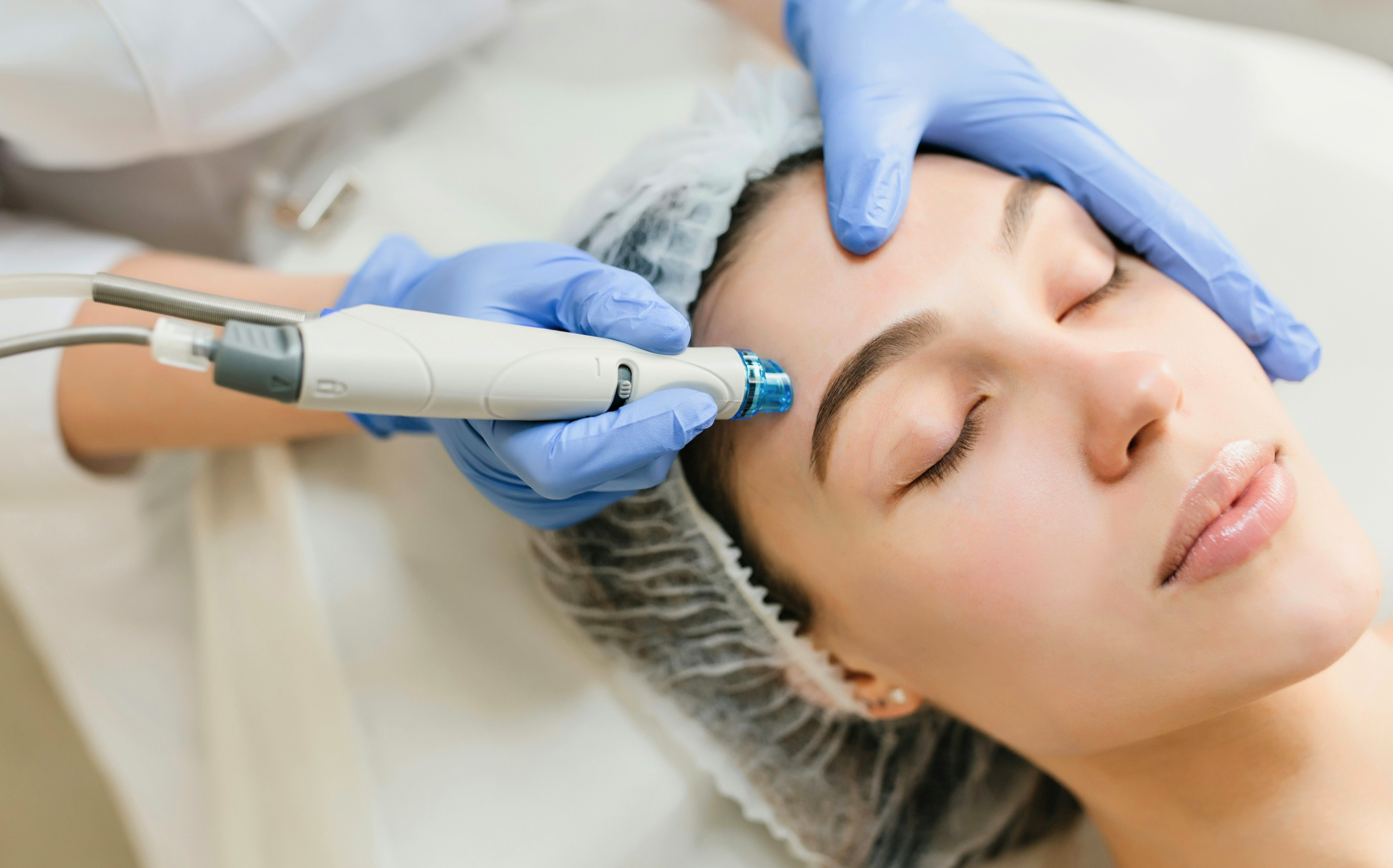
Hydrafacial is a patented three-step system from HydraFacial (Beauty Health Company) using Vortex-Fusion spiral tips to cleanse, extract, and infuse serums in a single low-downtime session. In Tokyo it's offered at both aesthetic medical clinics and beauty salons, but for foreigners the medical-clinic route is usually worth the slightly higher price: genuine authorized devices (Hydrafacial MD, Hydrafacial Allegro, or the newer Hydrafacial Syndeo), trained operators, and the option to combine it with proper dermatology follow-up. A persistent issue in the category is generic "hydradermabrasion Tokyo" devices marketed under Hydrafacial-adjacent names: they can deliver reasonable results, but they're not the same device, serums, or protocol.
Protocol tiers and add-ons you'll see:
- Signature Hydrafacial: the 30-minute three-step base protocol: Cleanse + Peel, Extract + Hydrate, Fuse + Protect with Activ-4, Beta-HD, and Antiox+ serums
- Deluxe Hydrafacial: adds one booster and LED light therapy (blue for acne, red for anti-aging)
- Platinum Hydrafacial: full Signature plus booster, LED, and lymphatic drainage
- Boosters: Britenol (pigmentation with alpha-arbutin and vitamin C), DermaBuilder (fine lines with HA and peptides), CTGF (growth factor), Perk (eye or lip)
- Hydrafacial Keravive: scalp protocol for hair and scalp health, typically a standalone service
- Body Hydrafacial for back, décolletage, and (less commonly) chest
- Combination plans pairing a deep cleansing facial Tokyo English-speaking clinics position as "prep" before Picolaser, RF microneedling, Ultherapy, or Thermage FLX: useful timing as long as the clinic spaces treatments correctly
Practical notes for foreigners:
- Confirm the device is a genuine HydraFacial unit (Syndeo, Allegro, or MD): authorized clinics display manufacturer branding and have serial-linked serum supply
- Downtime is minimal: mild redness for 1 to 2 hours: so scheduling around events is easy
- Stop retinoids, AHA/BHA acids, and strong physical exfoliants 3 to 5 days before to avoid stacking irritation
- Skip shaving or waxing the treatment area 24 hours prior; gentlemen should come clean-shaven
- Hydrafacial alone won't address deep pigmentation, significant scarring, or meaningful laxity: best framed as a supporting treatment in a broader plan that might include chemical peels, Picolaser, Rejuran, RF microneedling, or Ultherapy: not as a substitute for those treatments.
- Many clinics include a mild topical sunscreen at the end of the session; always reapply SPF 50+ in Tokyo's spring-summer UV months
5 English-Speaking Hydrafacial Clinics in Tokyo
Shirono Clinic: Ebisu
A long-running aesthetic dermatology group with an Ebisu flagship that sees many foreign patients. Shirono runs genuine HydraFacial units and offers Signature, Deluxe, and Platinum tiers, along with booster upgrades and the ability to pair Hydrafacial with Picolaser or RF microneedling visits.
- English level: English-speaking staff available by appointment; written consent forms in English
- Price range: ¥22,000 to ¥49,500 ($147 to $330) per session depending on tier
- Best for: patients wanting Hydrafacial as part of a structured dermatology plan
- Caveat: priced at the upper end of the Tokyo market for Hydrafacial specifically: you're paying for the dermatology wrap-around as much as the facial itself
Tokyo Midtown Clinic: Roppongi
The dermatology department inside Tokyo Midtown Clinic offers Hydrafacial on manufacturer-authorized equipment. They take a quiet, medical approach: no over-selling, straightforward tier explanation, and honest guidance on when a peel or device treatment would deliver more for the money.
- English level: full English intake; several physicians trained or board-certified abroad
- Price range: ¥27,500 to ¥55,000 ($183 to $367) per session
- Best for: first-time Hydrafacial patients who want a medical-grade environment
- Caveat: limited booster menu compared with aesthetic-focused clinics; strictly medical framing means fewer "spa" touches
Minami Aoyama Skin Care Clinic: Aoyama
Well-known among expats in central Tokyo, with Signature, Deluxe, and Platinum Hydrafacial tiers plus Keravive scalp and body protocols. Useful for patients combining Hydrafacial with other treatments like Picolaser, Thermage FLX, or Silhouette Soft in a broader skincare plan.
- English level: English-speaking concierge; physicians use English with translation support as needed
- Price range: ¥19,800 to ¥55,000 ($132 to $367) per session; Keravive from ¥38,500 ($257)
- Best for: patients wanting a full-menu Hydrafacial experience with booster and body options
- Caveat: staff will enthusiastically recommend multi-session packages: know which tier you actually want before the consultation to avoid overspending
AOI 7 Clinic: Ginza
A Ginza aesthetic clinic with dermatology and plastic surgery under one roof. Offers Signature and Deluxe Hydrafacial on authorized equipment, useful for coordinating a quick pre-event facial alongside injectables or laser treatments in the same visit.
- English level: English-speaking receptionist; consultation via English-speaking doctor on select days
- Price range: ¥16,500 to ¥44,000 ($110 to $293) per session
- Best for: combination visits with injectables or laser, tourists on tight schedules
- Caveat: booking system can default you to a Deluxe or Platinum upgrade: confirm tier, booster, and total price in writing before the session
Shinanozaka Clinic: Yotsuya / Shinjuku
A smaller, doctor-led practice with JSAPS/JSPRS-certified physicians on staff. Hydrafacial is offered as a maintenance treatment between more substantive dermatology visits, often paired with prescription skincare planning rather than marketed as a standalone experience.
- English level: English consultations available with specific doctors by request
- Price range: ¥22,000 to ¥44,000 ($147 to $293) per session
- Best for: patients wanting Hydrafacial integrated into a long-term, doctor-led plan
- Caveat: does not offer every booster or Keravive: patients seeking the full Hydrafacial Syndeo menu need a larger aesthetic clinic
Hydrafacial Tokyo Price Comparison (Tokyo, 2026)
Typical 2026 price ranges for Hydrafacial Tokyo patients encounter, across tiers, areas, and common add-ons.
| Tier / Add-on | Typical Range (¥) | USD Equivalent | Session Notes |
|---|---|---|---|
| Signature Hydrafacial (30 min) | ¥15,000 to ¥27,500 | $100 to $183 | base 3-step protocol |
| Deluxe Hydrafacial (~45 min) | ¥22,000 to ¥38,500 | $147 to $257 | adds 1 booster + LED |
| Platinum Hydrafacial (~60 min) | ¥33,000 to ¥55,000 | $220 to $367 | lymphatic + booster + LED |
| Add-on booster (per booster) | ¥5,500 to ¥16,500 | $37 to $110 | Britenol, DermaBuilder, CTGF |
| Perk eye or lip add-on | ¥5,500 to ¥11,000 | $37 to $73 | per area |
| Body Hydrafacial (back / décolleté) | ¥22,000 to ¥44,000 | $147 to $293 | per session |
| Hydrafacial Keravive (scalp) | ¥33,000 to ¥66,000 | $220 to $440 | per session |
| Package of 3 Signature sessions | ¥40,000 to ¥75,000 | $267 to $500 | 10 to 20% off vs per-session |
| Consultation fee | ¥0 to ¥3,300 | $0 to $22 | often waived for Hydrafacial |
Prices are ranges across the clinics above at April 2026; confirm directly when booking. USD converted at ¥150 = $1.
Not sure which clinic to choose, or how to book in Japanese? Kanbi handles clinic selection, Japanese communication, and booking for Hydrafacial treatments. Submit a treatment request → kanbicare.com
Hydrafacial Tokyo FAQ
How much does Hydrafacial in Tokyo cost?
A Signature Hydrafacial at English-speaking Tokyo clinics runs ¥15,000 to ¥27,500 ($100 to $183) in 2026. Deluxe tiers with a booster and LED are ¥22,000 to ¥38,500 ($147 to $257), and Platinum tiers with lymphatic drainage are ¥33,000 to ¥55,000 ($220 to $367). Packages of 3 Signature sessions are typically ¥40,000 to ¥75,000 ($267 to $500). Add-on boosters run ¥5,500 to ¥16,500 depending on the booster, and Keravive scalp treatment is ¥33,000 to ¥66,000 per session. Consultation fees are usually waived for Hydrafacial-only visits.
How often do I need Hydrafacial and how long do results last?
Most clinics recommend every 4 to 6 weeks for maintenance, with noticeable smoothness and hydration lasting 1 to 3 weeks after a single session. An initial course of 3 sessions 2 to 4 weeks apart gives a clearer picture of what the treatment actually does for your skin. Results are cumulative on texture and tone to a modest degree, but Hydrafacial doesn't create durable structural change: stop treating and skin returns to its baseline over a few weeks.
Does Hydrafacial actually work?
For immediate clean-feel, mild congestion, dullness, and short-term hydration, yes: the mechanical extraction and serum infusion deliver reliable same-day results. The published evidence base is modest and largely industry-funded, so claims about meaningful acne improvement, pigmentation reduction, or anti-aging effect should be read with skepticism. For significant acne, melasma, acne scarring, or laxity, Hydrafacial is best framed as a supporting treatment in a broader plan that might include chemical peels, Picolaser, Rejuran, RF microneedling, or Ultherapy: not as a substitute for those treatments.
Is Hydrafacial safe and what are the side effects?
Hydrafacial is one of the safer treatments in the aesthetic category. Expected effects include mild redness for 1 to 2 hours, temporary tightness, and occasional short-lived purging of clogged pores. Less common effects include stinging during the peel step (more likely if actives were used recently), breakouts in the 24 to 48 hours after for acne-prone skin, and irritation if a booster is used on sensitive skin. Serious complications are rare when a genuine device and trained operator are used.
Can tourists get Hydrafacial in Tokyo?
Yes: this is one of the easiest treatments to book as a visitor. Many clinics accept same-week appointments, English-speaking slots are usually available within a few days, and there's no meaningful downtime. Practical timing: schedule at the start of your trip so you can look fresh in photos, and avoid booking on the same day as other active treatments (laser, peels, injectables) to keep skin from stacking inflammation.
What's the difference between a Signature and Platinum Hydrafacial?
Signature is the 30-minute base protocol: cleanse and peel, extract, hydrate with Activ-4, Beta-HD, and Antiox+ serums. Deluxe adds one booster serum (Britenol for pigmentation, DermaBuilder for fine lines, CTGF for growth factor support) and LED therapy: roughly 45 minutes. Platinum is the full experience: lymphatic drainage pre-treatment, the Signature protocol, plus booster and LED: typically 60 minutes. For a first visit, Deluxe is the sweet spot; Platinum is worth it for special events or patients with puffiness that benefits from the lymphatic step.
Can I combine Hydrafacial with other treatments?
Commonly, yes. Popular combinations in Tokyo include Hydrafacial as "skin prep" one to two weeks before a Picolaser, chemical peel, or Rejuran session; Hydrafacial on a different day from RF microneedling or Ultherapy; and Hydrafacial after Botox or filler once injection sites have settled (24 to 48 hours). Avoid same-day stacking with actives like retinoids or aggressive peels: the treatment already includes peeling actives, and doubling up increases irritation without adding benefit.
Is Hydrafacial cheaper in Tokyo than in Bangkok or Seoul?
Bangkok is often 30 to 50% cheaper on Signature and Deluxe tiers, and Seoul is usually 15 to 30% cheaper. Tokyo's value sits elsewhere: reliable device authenticity (Hydrafacial Syndeo and Allegro sourced through official distribution), serum supply traceability, and the medical environment at many Tokyo clinics that lets you add a quick dermatology consult alongside. If absolute price is the priority, Tokyo isn't the cheapest; for genuine device and well-trained operators, Hydrafacial Japan English-speaking clinics hold up well.
Booking Hydrafacial Tokyo Clinics Through Kanbi
Choosing a Hydrafacial Tokyo clinic as a foreigner means confirming device authenticity, picking the right tier, and finding English support: and most clinic websites are Japanese-only with limited transparency on which specific HydraFacial model they run and which boosters are stocked. Kanbi matches you to the right English-speaking clinic in Tokyo, verifies the equipment and menu, and handles the Japanese-language communication and booking. Submit a treatment request at kanbicare.com and we'll take it from there.
Related Kanbi guides: PRP facial in Tokyo, chemical peel in Tokyo, and anti-aging treatments in Tokyo.