
Last verified: April 2026. Prices, surgeons, and English support can change: confirm directly when booking.
Hair transplant Tokyo searches have climbed every year as foreign residents and visiting patients look for FUE work done in a Japanese clinical environment rather than the higher-volume Turkish market. In 2026 a focused group of English-speaking Tokyo clinics handle FUE, DHI, and combined medical-plus-surgical hair restoration plans at international-standard quality, and this guide covers techniques, realistic 2026 prices in ¥ and USD, the clinics worth shortlisting, and how Kanbi handles the Japanese booking side.
What to Know Before Hair Transplant in Tokyo
The 2026 standard for hair transplant Tokyo clinics is FUE: follicular unit extraction: in which individual follicular units (1 to 4 hairs each) are harvested one by one from the donor area at the back and sides of the scalp using a 0.8 to 1.0 mm punch, then implanted into recipient sites in the thinning area. The strip-harvest FUT technique is still offered by a handful of Tokyo surgeons but has largely been displaced by FUE because FUE leaves no linear scar. DHI (Direct Hair Implantation) is a variant of FUE that uses a Choi implanter pen to place grafts in a single step rather than separate incision-then-implantation stages; it is particularly common in East Asian hair transplant clinics because the pen allows dense, angle-controlled placement on straight Asian hair. Results from a well-executed FUE take 9 to 12 months to fully mature and are permanent because transplanted follicles retain their donor-area genetic resistance to dihydrotestosterone. Medical therapy: finasteride, dutasteride, topical minoxidil: is near-universally recommended alongside surgery to prevent ongoing loss in non-transplanted areas; a surgery without a medical plan usually looks strange within 3 to 5 years as surrounding native hair continues to thin.
- FUE (manual or motorized punch): modern standard. No linear scar, donor area shaved or trimmed for the session.
- DHI (Choi implanter pen): variant of FUE. Pen-delivered placement, good for dense packing and hairline work on Asian hair.
- Sapphire blade FUE: FUE using sapphire-tipped blades for recipient incisions. Marketing-heavy in some markets but technically real; potentially smaller scabs.
- ARTAS robotic FUE: robotic punch harvesting. Consistent punch angle and depth; costs more and is offered at select Tokyo clinics.
- FUT (strip harvest): older technique. Linear scar at donor but can yield higher single-session graft counts.
- Medical therapy (AGA treatment): finasteride 1 mg or dutasteride 0.5 mg daily, PMDA-approved in Japan; topical minoxidil 5%. Near-universal adjunct to surgery.
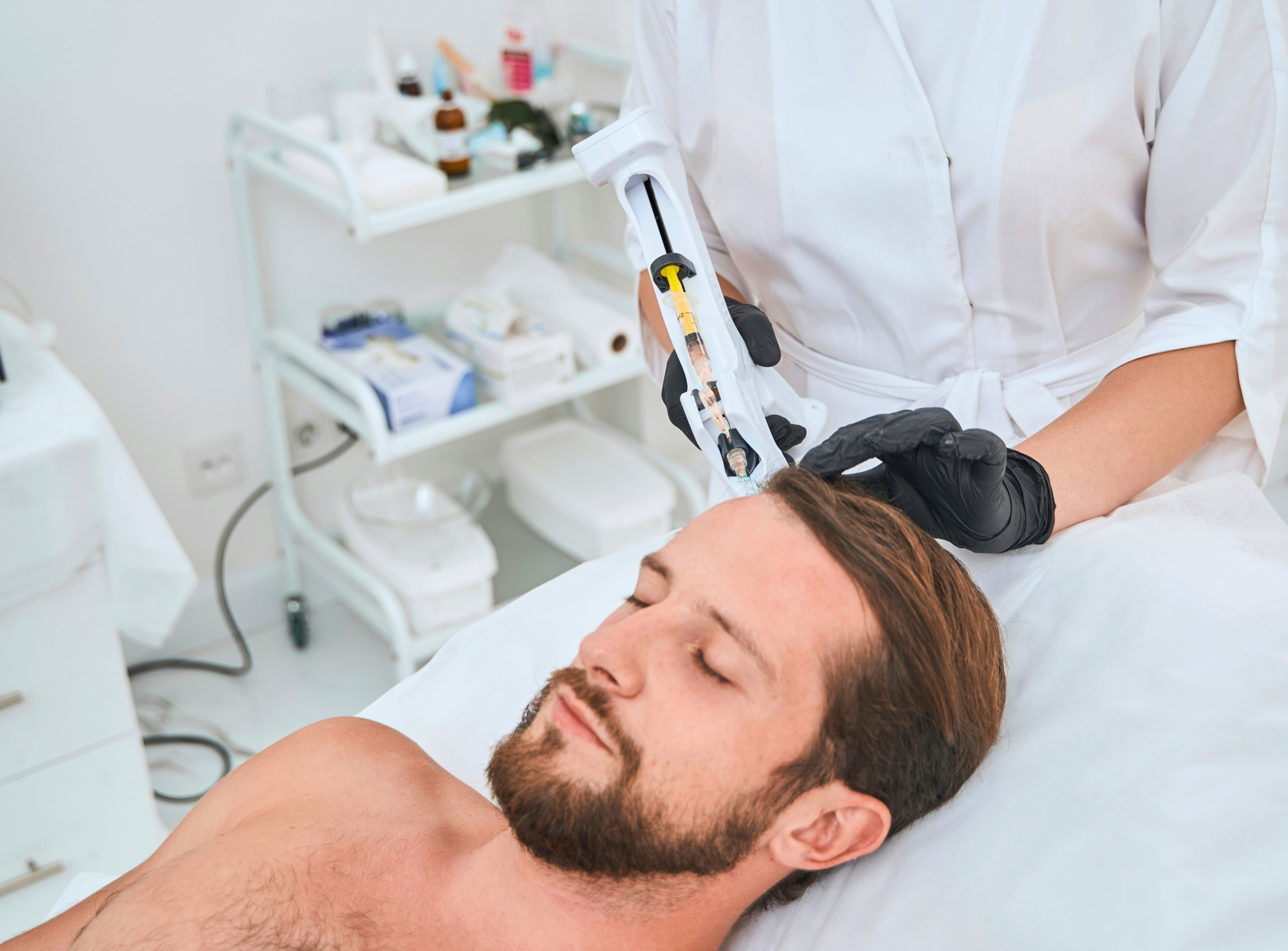
- PRP / mesotherapy to scalp: adjunctive. Supporting treatment in a broader plan rather than standalone.
- Expect a long day: FUE sessions run 6 to 10 hours depending on graft count. Bring headphones and podcasts.
- Tourists can undergo hair loss surgery Tokyo visits in 5 to 8 days: day 1 to 2 consult and labs, day 3 surgery, day 4 to 6 rest with first wash protocol, day 6 to 7 clearance to fly.
- Red dots at donor and recipient sites for 7 to 14 days. Tiny scabs fall off by day 10 to 14. Transplanted hair sheds at week 2 to 4 (normal shock loss); new growth starts at month 3.
- No swimming, sauna, or vigorous exercise for 3 weeks. Loose cap or hat acceptable from day 10 to 12.
- Japanese clinics typically expect patients to be on finasteride or dutasteride for at least 3 months before surgery to stabilize loss: schedule the medical consult early.
5 English-Speaking Hair Transplant Clinics in Tokyo
Tokyo Memorial Clinic: Toranomon
A long-established hair restoration practice in central Tokyo with a surgeon known for FUE hair transplant Tokyo English patients and experienced with Asian and non-Asian hair textures. The clinic offers both manual FUE and DHI with the Choi implanter pen, and coordinates medical management (finasteride, dutasteride, minoxidil) alongside surgical planning.
- English level: High: surgeon and coordinators work with English-speaking patients regularly
- Price range: ¥1,000 to ¥1,500 per graft; typical total ¥900,000 to ¥3,500,000
- Best for: Patients wanting an experienced hair specialist rather than a general aesthetic clinic
- Caveat: Booking for large sessions (3,000+ grafts) can require 8 to 12 weeks lead time
AGA Skin Clinic: Shinjuku
A national-chain clinic with strong volume in medical AGA treatment and a hair transplant service using FUE. The emphasis here is often on integrated plans: medical therapy first, PRP or mesotherapy adjunct, and FUE for areas that need direct coverage. Shinjuku branch is centrally located and used to English-speaking walk-in inquiries, though technical English varies by coordinator.
- English level: Moderate: English consultation requests should be confirmed when booking
- Price range: ¥900 to ¥1,300 per graft; medical-only plans from ¥15,000/month
- Best for: Patients who want a combined medical + surgical plan at a chain-clinic price point
- Caveat: Chain clinics vary in surgical consistency: verify the specific surgeon handling your case at consult
Tokyo Midtown Clinic: Roppongi
The plastic surgery department within Tokyo Midtown Clinic offers FUE hair transplant alongside broader aesthetic services, with JSAPS-credentialed surgeons and formal pre-op protocol. Good for patients wanting hair transplant under the same roof as other aesthetic work they may be considering during an extended Tokyo visit.
- English level: High: clinic has served diplomatic and international corporate clientele for years
- Price range: ¥1,100 to ¥1,600 per graft; typical total ¥1,000,000 to ¥3,500,000
- Best for: Foreign residents or tourists wanting central Roppongi logistics and multidisciplinary aesthetic care
- Caveat: Hair transplant volume is lower than at specialty hair clinics: confirm surgeon experience with your target graft count
KM Shinjuku Clinic: Shinjuku
A Shinjuku-based aesthetic and hair restoration practice offering FUE and DHI techniques with a focus on hairline design for both men and women. The clinic handles female pattern hair loss and hairline-lowering cases alongside standard male pattern transplants.
- English level: Moderate-high: English support available, consent materials bilingual
- Price range: ¥900 to ¥1,400 per graft; typical total ¥800,000 to ¥3,000,000
- Best for: Hairline design cases, female pattern hair loss, and smaller touch-up transplants
- Caveat: Primarily hair-focused: less integrated with broader plastic surgery if you need combined aesthetic work
City Clinic: Azabu
An international-focused practice in Azabu-Juban that offers FUE hair transplant through its plastic surgery arm, with English-first consultation and consent throughout. The clinic pairs surgery with AGA medical management so the plan includes preventing future loss, not just covering existing thinning.
- English level: High: clinic positions itself as an English-speaking practice
- Price range: ¥1,200 to ¥1,700 per graft; typical total ¥1,100,000 to ¥3,800,000
- Best for: Expats and visiting patients who want fluent English throughout a hair transplant plan
- Caveat: Pricing sits at the upper end of the Tokyo range, reflecting the bilingual-clinic premium
Hair Transplant Tokyo Price Comparison (Tokyo, 2026)
Hair transplant prices Tokyo clinics quote are almost always per graft, with the total depending on the number of grafts needed. Typical sessions run 1,500 to 4,000 grafts; larger cases are often split into two sessions.
| Clinic | Technique | Price per Graft (¥) | Typical Total Session (¥ / USD) |
|---|---|---|---|
| Tokyo Memorial Clinic | FUE / DHI (Choi pen) | ¥1,000 to ¥1,500 | ¥900,000 to ¥3,500,000 / $6,000 to $23,333 |
| AGA Skin Clinic | FUE + medical plan | ¥900 to ¥1,300 | ¥800,000 to ¥3,000,000 / $5,333 to $20,000 |
| Tokyo Midtown Clinic | FUE (JSAPS plastic surgery) | ¥1,100 to ¥1,600 | ¥1,000,000 to ¥3,500,000 / $6,667 to $23,333 |
| KM Shinjuku Clinic | FUE / DHI, hairline design | ¥900 to ¥1,400 | ¥800,000 to ¥3,000,000 / $5,333 to $20,000 |
| City Clinic | FUE, English-first | ¥1,200 to ¥1,700 | ¥1,100,000 to ¥3,800,000 / $7,333 to $25,333 |
Prices exclude consult fees, pre-op labs, and AGA medication costs unless stated. ¥150 = $1 used for conversion. Graft counts for typical cases: hairline refinement 1,200 to 2,000; front + mid-scalp 2,500 to 3,500; crown coverage 3,500 to 5,000+.
Not sure which clinic to choose, or how to book in Japanese? Kanbi handles clinic selection, Japanese communication, and booking for hair transplant treatments. Submit a treatment request → kanbicare.com
Hair Transplant Tokyo FAQ
How much does hair transplant cost in Tokyo?
Per-graft pricing runs ¥900 to ¥1,700 in 2026, so total session cost depends on the graft count. A hairline refinement of 1,500 grafts runs ¥1,350,000 to ¥2,550,000 ($9,000 to $17,000). A full front and mid-scalp coverage of 3,000 grafts runs ¥2,700,000 to ¥5,100,000 ($18,000 to $34,000). Larger cases covering the crown often need staging across two sessions 9 to 12 months apart. Add medication and consult fees of ¥30,000 to ¥100,000 over the first year.
How many sessions and how long do results last?
Most patients complete their transplant goals in one or two sessions. Transplanted follicles are permanent: they retain the donor-area resistance to hormonal loss for decades. However, native non-transplanted hair continues to thin with the course of androgenetic alopecia unless maintained on finasteride, dutasteride, or minoxidil. A realistic expectation is permanent transplanted hair plus ongoing medical management; patients who skip medication often find their surrounding native hair has thinned enough by year 5 that a second session is needed to maintain the overall look.
Does hair transplant actually work?
Yes: FUE has strong evidence for durable hair growth from transplanted follicles, with typical graft survival rates above 90% in experienced hands. The aesthetic result depends on hairline design, angle and density of placement, and donor management. Medical therapy (finasteride, minoxidil) has solid evidence for slowing or partially reversing hair loss without surgery and is the appropriate first step for early-stage AGA before committing to transplant. Non-transplant adjuncts like PRP, mesotherapy, and low-level laser therapy are supporting treatments in a broader plan: useful layered in, not reliable as standalone answers.
Is hair transplant safe and what are the side effects?
FUE is a low-risk outpatient procedure in experienced hands. Expected side effects: scalp redness for 7 to 14 days, tiny scabs at donor and recipient sites, temporary numbness, swelling of the forehead for 2 to 4 days, and shock loss at weeks 2 to 4 where transplanted hair temporarily sheds before regrowing. Less common risks include folliculitis (treatable with topical antibiotics), cyst formation, asymmetric growth requiring touch-up, and over-harvesting of the donor area if graft counts are pushed too high in a single session. Serious complications are rare but do occur with inexperienced surgeons.
Can tourists get hair transplant in Tokyo?
Yes. Plan 5 to 8 days: day 1 to 2 consult and pre-op labs (bring any existing AGA medication records), day 3 surgery (6 to 10 hours), day 4 to 6 rest with first wash protocol, day 6 to 7 clearance to fly. Tokyo clinics will provide English-language post-op instructions and medication prescriptions that transfer home. Most patients need a medical AGA regimen in place for 3 months before surgery to stabilize loss: coordinate this early through a teleconsult if possible.
What's the difference between FUE and DHI at hair restoration Japan English clinics?
Both are follicular unit extraction techniques: grafts are harvested individually rather than via strip excision. The difference is in implantation. Standard FUE creates recipient incisions first and then places grafts into the incisions in a second step. DHI uses the Choi implanter pen to cut and place grafts in a single motion. DHI offers good control over angle and depth and is particularly useful for dense packing on straight Asian hair; standard FUE is slightly faster and used for larger sessions. Graft survival rates are comparable when done well.
Can I combine hair transplant with medical or adjunct treatments?
Yes: and it's strongly recommended. Finasteride or dutasteride with topical minoxidil 5% is near-universally recommended alongside surgery to protect non-transplanted hair. PRP injections at the time of surgery or during post-op months are used by many Tokyo clinics to support graft take, though evidence for this specific benefit is moderate. Low-level laser therapy devices (helmet or cap) are sometimes layered in as home adjunct. For women with female pattern hair loss, spironolactone and minoxidil are the medical standard; transplant is added when medical alone is insufficient.
Is hair transplant cheaper in Tokyo vs Istanbul or Seoul?
Istanbul is significantly cheaper per-graft for Turkish FUE packages: often 30 to 60% below Tokyo pricing: but the quality variance is wider and medical follow-up from home is harder to coordinate. Seoul is comparable to or slightly below Tokyo pricing with high volume. Tokyo's value is the combination of consistent surgical training, strict facility standards, honest consult style that sets realistic graft-count expectations, and clean coordination with medical AGA management. For patients prioritizing surgical consistency over headline price, Tokyo is competitive.
Book Hair Transplant Tokyo with Kanbi
Hair transplant Tokyo options in 2026 span five English-capable clinics, techniques from standard FUE and DHI with the Choi implanter pen to robotic ARTAS at select practices, and per-graft pricing from ¥900 to ¥1,700 depending on clinic and technique. Good outcomes depend on hairline design, surgeon experience, and integrating medical AGA therapy into the long-term plan: not just chasing the lowest per-graft number. Kanbi shortlists the right clinic for your graft count and hairline goal, handles the Japanese-language booking, and coordinates pre-op labs, AGA medication continuity, and post-op check-ins in English: submit a treatment request at kanbicare.com to start.
Related Kanbi guides: PRP for hair loss in Tokyo., and how to book a clinic in Tokyo without speaking Japanese